

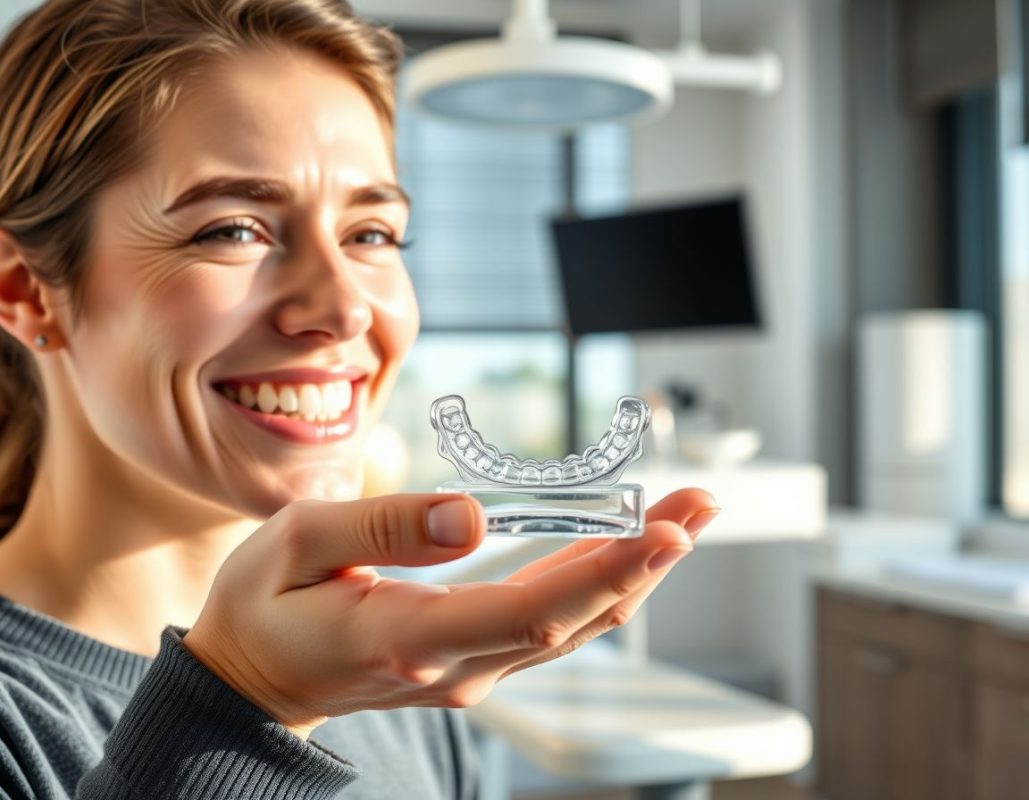
Most adults who would like straighter teeth never did anything about it as a teenager — and now the idea of spending a year or two in visible metal braces at work feels like a step backwards. So the arrival of clear aligners, the best-known brand being Invisalign, has quietly changed the maths for a lot of people.
But do these near-invisible trays actually work? Are they only for minor corrections? And what does the commitment really look like once you start?
This guide explains how clear aligner treatment works, who it suits, and what to expect day to day if you choose it.
How Do Clear Aligners Straighten Teeth?
Clear aligners work on the same principle as braces: sustained, gentle pressure that nudges teeth into new positions over months. The difference is how the force is delivered.
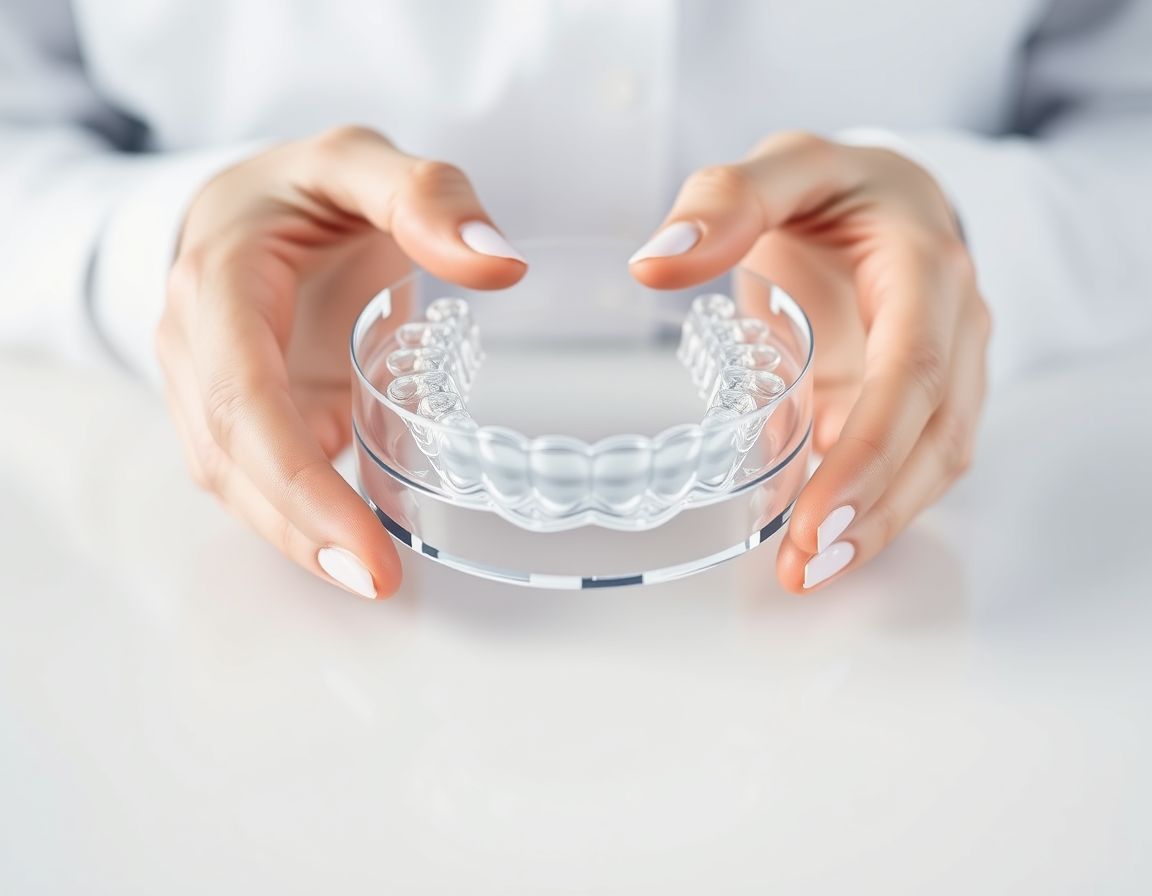
Instead of wires and brackets, you receive a series of thin, transparent trays made from scans of your teeth. Each tray is fractionally straighter than the last. Wearing a tray for one to two weeks — 20 to 22 hours a day — moves the teeth a fraction of a millimetre; then the next tray takes over. Over 6 to 18 months, the sequence adds up to a fully straightened arch.
Because the trays are removable, there are no dietary restrictions and no special cleaning around brackets. That single design choice is what makes aligners practical for adults in a way traditional braces often aren’t.
Can Aligners Fix Anything Braces Can?
Honestly: most things, not everything. Clear aligners handle crowded or spaced teeth, protruding front teeth, and many bite corrections very well, and modern systems with attachments — small tooth-coloured bumps bonded to certain teeth — have widened the range considerably.
Where aligners have limits: severe rotations, teeth that need to be moved vertically by a significant distance, and complex jaw-relationship problems. These cases are often better served by conventional braces or a combination approach.
This is why a proper assessment matters before committing to any treatment. An orthodontic consultation will tell you whether your particular alignment falls comfortably within aligner territory or sits near the edge of it.
Am I Too Old to Straighten My Teeth?
No — and this question comes up more often than any other. Teeth move in response to pressure at any age; the biological mechanism doesn’t switch off when you turn 30, 40 or 60.
What does change with age is context. Adult treatment tends to take somewhat longer than teenage treatment because adult bone remodels more gradually, and adults are more likely to have fillings, crowns, worn enamel or gum recession that shape the treatment plan. These are factors to plan around, not barriers.
A large share of aligner patients today are adults who finally chose to do something they’d been thinking about for years.
What Is Daily Life With Aligners Actually Like?
The trays come out for eating and for anything other than water, which means:
- No food restrictions — popcorn and apples remain on the menu, since the trays aren’t in while you eat
- Coffee and red wine are fine at mealtimes; drinking them with trays in would stain the plastic and slowly bathe the teeth in sugar
- Teeth get brushed after eating before the trays go back in — or at least rinsed well when brushing isn’t possible
- The trays are cleaned morning and night with a soft brush; hot water warps them
What surprises most new patients is the feeling of the attachments against the inside of the lips and cheeks for the first week, and a day of pressure each time a new tray starts — a sign the teeth are moving. Mild and temporary speech adjustments are normal at the start, too.
Compliance is the entire game. Wear the trays 20 to 22 hours a day and treatment tracks to plan; leave them out for long stretches and it stalls. If that level of daily discipline sounds unappealing, fixed braces — which can’t be forgotten in a drawer — may honestly be the more reliable choice.
What Happens After the Teeth Are Straight?
The part nobody advertises: teeth that have been moved want to drift back. Retainers are not optional.
Most patients wear a clear retainer nightly, indefinitely — a much lighter commitment than treatment itself, but a permanent one. Skipping retainers is the single most common reason “straightened” teeth crowd up again five years later, and re-treatment is far more annoying than wearing a retainer to bed.
Regular check-ups and cleans matter during and after treatment as well; moving teeth in a mouth with untreated gum disease is a poor combination.
Why Choose Invisalign in Narre Warren?
Aligner treatment is a series of short appointments over many months — scans, checks, tray handovers. Choosing Invisalign in Narre Warren means those visits happen minutes from home at the Glowing Smiles Dental clinic, with your treating dentist able to see the whole picture — aligner progress alongside your general dental health — rather than splitting your care across practices.
The clinic also offers a complimentary initial orthodontic consultation, which is the natural place to find out whether your teeth are a straightforward aligner case or something more involved.
A Discreet Option That Fits Adult Life
Clear aligners didn’t make orthodontics faster or magical — they made it compatible with meetings, weddings and photographs. The teeth still move the same old way; they just do it invisibly, and with the ability to eat a steak on a Friday night.
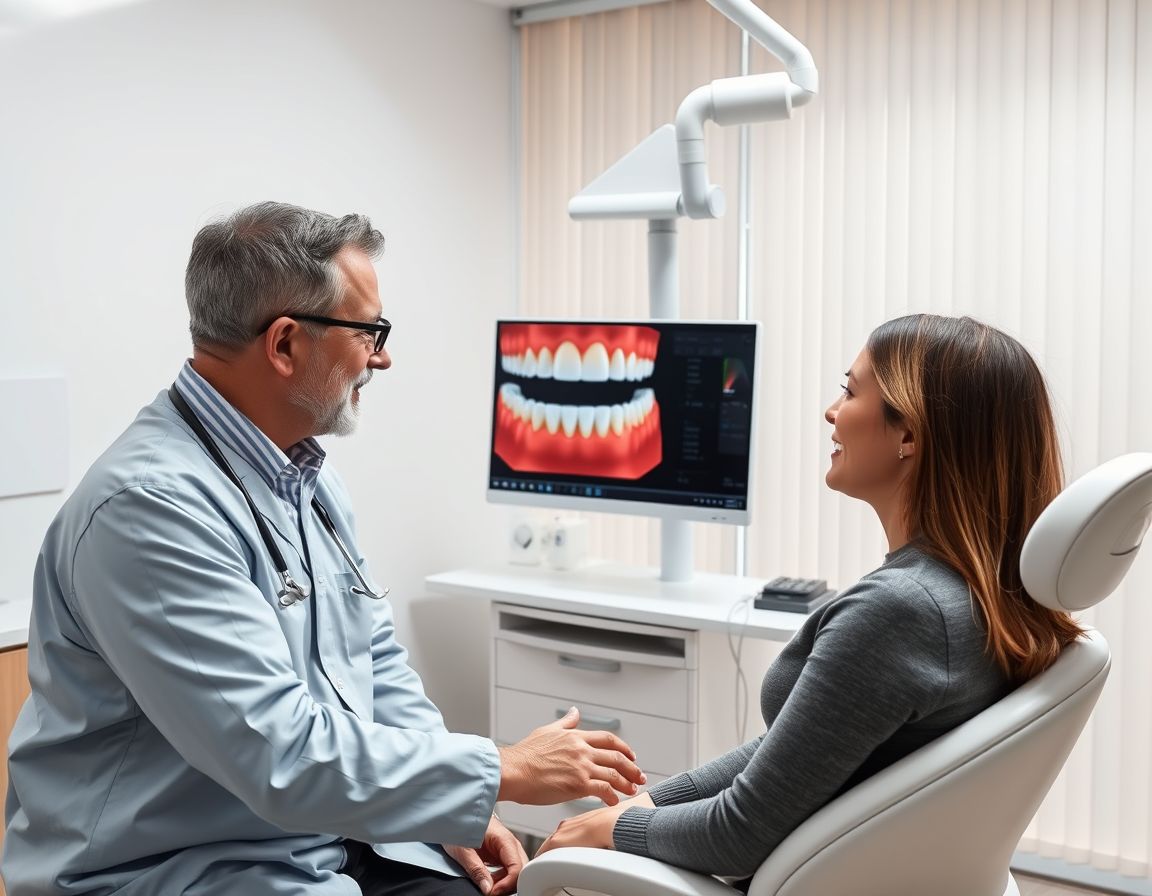
If crooked or crowded teeth have been quietly bothering you for years, a consultation costs nothing and comes with no obligation. The team at Glowing Smiles Dental can scan your teeth, show you a projection of the outcome, and let you decide from there.
